
Psychologist vs Psychiatrist: Who Should You Consult?
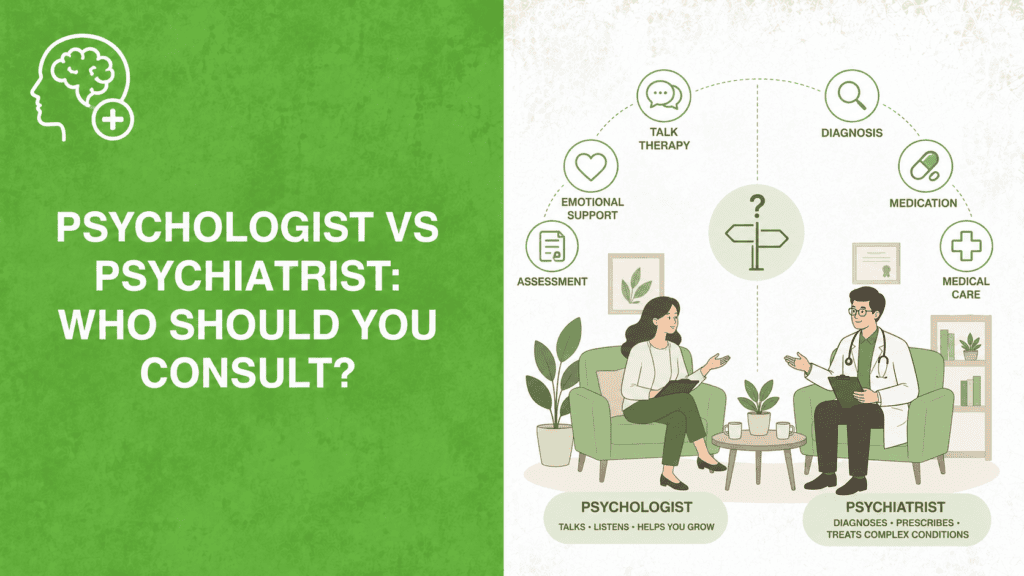
When you are struggling with your mental health, deciding to seek professional help is an important first step.
But many people are unsure about whom they should consult.
Should you speak to a psychologist?
Do you need a psychiatrist?
What is the difference between the two?
Both psychologists and psychiatrists are trained to support people experiencing emotional, behavioural, and mental health concerns. However, their training, treatment approaches, and areas of focus are different.
Understanding these differences can help you choose the professional who may be most suitable for your needs.
In this guide, we will explain the difference between a psychologist and a psychiatrist, what each professional does, when you may consider consulting them, and how both may work together as part of your mental health care.
Who Is a Psychologist?
A psychologist is a mental health professional trained to understand human thoughts, emotions, behaviour, and psychological patterns.
Psychologists commonly help people work through emotional difficulties, behavioural concerns, relationship challenges, stress, anxiety, low mood, trauma, and other psychological concerns.
They typically use structured therapeutic approaches to help individuals understand what they are experiencing and develop healthier coping strategies.
Depending on their qualifications, training, and area of practice, psychologists may provide:
- Psychological counselling
- Psychotherapy
- Behavioural interventions
- Psychological assessments
- Emotional regulation strategies
- Stress management techniques
- Relationship counselling
- Support for anxiety, low mood, and trauma-related concerns
Psychologists generally focus on understanding patterns of thinking, behaviour, emotions, relationships, and life experiences.
Who Is a Psychiatrist?
A psychiatrist is a medical doctor who specialises in mental health.
Because psychiatrists have medical training, they are qualified to assess mental health conditions from both psychological and biological perspectives.
They can evaluate symptoms, diagnose psychiatric conditions, prescribe medication where clinically appropriate, and monitor how individuals respond to treatment.
Psychiatrists may support people experiencing concerns such as:
- Severe or persistent depression
- Severe anxiety
- Bipolar disorder
- Schizophrenia and other psychotic disorders
- Obsessive-compulsive disorder
- Severe sleep disturbances linked to psychiatric conditions
- Attention and concentration difficulties
- Substance-related mental health concerns
- Significant changes in mood, behaviour, or functioning
One of the main differences is that psychiatrists can prescribe medication, whereas psychologists generally do not prescribe psychiatric medication.
Psychologist vs Psychiatrist: What Is the Main Difference?
The simplest way to understand the difference is this:
A psychologist primarily works through psychological therapies and behavioural interventions, while a psychiatrist is a medical doctor who can diagnose mental health conditions and prescribe medication.
However, the roles often overlap.
Both professionals may assess emotional concerns, support people with mental health conditions, and help improve overall psychological well-being.
The main difference lies in their training and the treatment tools available to them.
Psychologist vs Psychiatrist: Key Differences
| Area | Psychologist | Psychiatrist |
|---|---|---|
| Professional background | Trained in psychology and psychological therapies | Medical doctor specialising in psychiatry |
| Main approach | Therapy, counselling, behavioural and psychological techniques | Medical assessment, diagnosis, medication management, and psychiatric care |
| Can prescribe medication? | Generally no | Yes |
| Therapy | Commonly provides psychotherapy and counselling | May provide therapy, but many psychiatrists primarily focus on medical and medication management |
| Session style | Often longer and focused on thoughts, emotions, behaviours, and coping strategies | Often focused on symptoms, diagnosis, medication, treatment response, and overall clinical status |
| Suitable for | Emotional, behavioural, relationship, stress, and psychological concerns | Conditions that may require medical assessment or medication |
When Should You Consult a Psychologist?
You may consider consulting a psychologist when emotional, behavioural, or relationship concerns are affecting your daily life.
Some common reasons include:
1. You Are Experiencing Anxiety or Overthinking
If you frequently worry, overanalyse situations, feel restless, or struggle to switch your mind off, a psychologist can help you understand what triggers these patterns.
Therapy can help you develop practical strategies for managing worry, challenging unhelpful thoughts, and improving emotional regulation.
2. You Are Feeling Low or Emotionally Drained
Periods of low mood, reduced motivation, emotional exhaustion, or feeling disconnected from activities you previously enjoyed may benefit from psychological support.
A psychologist can help you understand contributing factors and develop healthier coping strategies.
3. Stress Is Becoming Difficult to Manage
Work pressure, family responsibilities, financial concerns, caregiving, and major life changes can gradually become overwhelming.
Therapy can help you identify stress patterns, establish healthier boundaries, and build practical coping skills.
4. You Are Struggling in Your Relationships
Psychologists frequently work with concerns involving:
- Communication difficulties
- Recurring arguments
- Trust issues
- Emotional distance
- Relationship anxiety
- Family conflict
Individual therapy or couples therapy may help you understand relationship patterns and communicate more effectively.
5. You Are Going Through a Major Life Transition
Changes such as marriage, parenthood, relocation, career changes, separation, bereavement, or retirement can affect emotional well-being.
A psychologist can provide a supportive space to process these changes and adjust to new circumstances.
6. You Want to Understand Yourself Better
Therapy is not only for people experiencing a mental health crisis.
Many people work with psychologists to better understand their emotions, improve confidence, develop healthier relationships, strengthen communication, and create more helpful behavioural patterns.
When Should You Consult a Psychiatrist?
A psychiatric consultation may be particularly important when symptoms are severe, persistent, significantly affecting daily functioning, or may require medical evaluation.
You may consider consulting a psychiatrist if:
1. Symptoms Are Significantly Affecting Daily Life
If emotional or behavioural symptoms are making it very difficult to work, study, maintain relationships, sleep, or complete everyday activities, a psychiatric evaluation may be appropriate.
2. You May Need Medication
Some mental health concerns may benefit from medication as part of treatment.
A psychiatrist can evaluate whether medication is appropriate, discuss possible benefits and risks, and monitor your response.
3. You Are Experiencing Severe Mood Changes
Significant changes in mood, energy, sleep, activity levels, impulsivity, or behaviour may require medical assessment.
4. You Are Experiencing Hallucinations or Unusual Beliefs
Hearing or seeing things that others do not, severe confusion, or strongly held beliefs that appear disconnected from reality should be assessed by a qualified mental health professional.
A psychiatrist may be an important part of this assessment.
5. Previous Therapy Has Not Been Enough
Sometimes psychological therapy alone may not provide sufficient relief from symptoms.
In such situations, your psychologist may recommend a psychiatric consultation to explore whether medication or additional medical evaluation could support your treatment.
6. You Are Already Taking Psychiatric Medication
If you are taking medication for a mental health condition, regular psychiatric follow-up may be required to review symptoms, dosage, side effects, and treatment progress.
Can You See a Psychologist and Psychiatrist at the Same Time?
Yes.
In fact, many people benefit from working with both.
For example, a psychiatrist may prescribe medication to help manage significant symptoms, while a psychologist provides therapy to address emotional patterns, coping strategies, behaviours, relationships, or underlying psychological concerns.
This combined approach can be useful when both medical and psychological support are needed.
The two professionals may work collaboratively, with your consent, to ensure treatment is coordinated.
Does Seeing a Psychiatrist Mean Your Condition Is Severe?
No.
Consulting a psychiatrist does not automatically mean that you have a severe mental illness.
People may consult psychiatrists for many reasons, including anxiety, sleep difficulties, persistent low mood, concentration difficulties, medication evaluation, or symptoms that have not improved with other forms of support.
A psychiatric consultation is simply a medical assessment of your mental health.
Does Seeing a Psychologist Mean You Do Not Need Medication?
Not necessarily.
A psychologist may recognise that your symptoms could benefit from psychiatric assessment and recommend that you consult a psychiatrist.
Similarly, a psychiatrist may recommend therapy alongside medication.
Mental health treatment is not always an either-or decision.
For some concerns, therapy may be sufficient.
For others, medication may be recommended.
And for some people, a combination of therapy and medication may provide the most appropriate support.
What Happens During a Psychology Session?
A psychology session generally involves a conversation about what you are experiencing and how it is affecting your life.
During early sessions, your psychologist may ask about:
- Your current concerns
- Thoughts and emotions
- Stressors and triggers
- Relationships
- Sleep and daily routine
- Past experiences
- Coping strategies
- Your goals for therapy
Over time, therapy may involve identifying patterns, developing coping strategies, changing unhelpful behaviours, improving emotional regulation, and working towards specific therapeutic goals.
Psychologists may use approaches such as:
- Cognitive Behavioural Therapy (CBT)
- Mindfulness-based approaches
- Behavioural techniques
- Emotion-focused approaches
- Psychodynamic approaches
- Trauma-informed interventions
- Solution-focused strategies
The approach used depends on your concerns, goals, and the psychologist’s clinical assessment.
What Happens During a Psychiatric Consultation?
A psychiatric consultation generally involves a detailed assessment of your symptoms, medical history, mental health history, current functioning, and overall well-being.
Your psychiatrist may ask about:
- Your current symptoms
- When the symptoms began
- How symptoms affect everyday functioning
- Sleep and appetite
- Mood and energy levels
- Medical history
- Previous mental health treatment
- Current medications
- Family history
- Alcohol or substance use where relevant
Based on the assessment, the psychiatrist may recommend:
- Medication
- Psychological therapy
- Lifestyle changes
- Further medical evaluation where necessary
- Follow-up appointments to monitor progress
Psychologist or Psychiatrist for Anxiety?
Both psychologists and psychiatrists can support people experiencing anxiety.
If anxiety is manageable but affecting your thoughts, behaviour, confidence, relationships, or daily routine, starting with a psychologist may be helpful.
Therapy can help you understand anxiety triggers and develop strategies to manage worry, avoidance, physical symptoms, and unhelpful thinking patterns.
If anxiety is severe, causing significant functional difficulties, resulting in frequent panic symptoms, severely disrupting sleep, or not improving with therapy, a psychiatric consultation may also be appropriate.
Psychologist or Psychiatrist for Depression?
The right professional depends on the nature and severity of the symptoms.
A psychologist can help you explore emotional patterns, behaviour, relationships, stressors, and coping strategies associated with low mood.
If symptoms are severe, persistent, or significantly affecting your ability to function, a psychiatrist may evaluate whether medication should be considered.
Many people experiencing depression receive both therapy and psychiatric care.
Psychologist or Psychiatrist for Sleep Problems?
Sleep difficulties can have many causes.
If sleep problems are connected with stress, overthinking, anxiety, lifestyle patterns, or behavioural habits, psychological interventions may be helpful.
If sleep changes are severe, prolonged, associated with major mood changes, or may have a medical or psychiatric cause, further assessment by a psychiatrist or another medical professional may be recommended.
Psychologist or Psychiatrist for Relationship Problems?
Relationship concerns are generally addressed through psychological counselling or couples therapy.
A psychologist can help couples improve communication, understand recurring conflict patterns, rebuild trust, and strengthen emotional connection.
A psychiatrist is typically not the first professional consulted solely for relationship difficulties unless one partner is also experiencing symptoms requiring psychiatric assessment.
How Do You Know Where to Start?
If you are uncertain whether to see a psychologist or psychiatrist, you do not have to make the decision perfectly before asking for help.
A psychologist can refer you to a psychiatrist if medical evaluation may be helpful.
A psychiatrist can also recommend therapy if psychological support is needed.
As a general guide:
- If you want help understanding emotions, thoughts, behaviours, stress, relationships, or coping patterns, consider starting with a psychologist.
- If symptoms are severe, significantly affecting your functioning, or may require medication, consider consulting a psychiatrist.
- If you need both therapy and medication management, you may work with both professionals.
When Should You Seek Urgent Mental Health Support?
Some situations require more immediate attention.
Seek urgent professional or emergency support if you or someone you know is experiencing:
- Thoughts of suicide or self-harm
- An immediate risk of harming themselves or someone else
- Severe confusion or disorientation
- Hallucinations or significant loss of contact with reality
- Extreme behavioural changes
- Inability to care for basic needs
In such situations, do not rely only on a routine therapy appointment. Contact an appropriate emergency service, hospital, or mental health professional for immediate assessment.
Frequently Asked Questions
Who is better, a psychologist or a psychiatrist?
Neither is inherently better.
They have different roles.
A psychologist primarily provides psychological therapy and behavioural support, while a psychiatrist is a medical doctor who can diagnose mental health conditions and prescribe medication.
The right choice depends on your symptoms and treatment needs.
Should I see a psychologist or psychiatrist first?
If your concerns involve stress, anxiety, relationships, emotional difficulties, overthinking, or behavioural patterns, you may start with a psychologist.
If symptoms are severe, significantly affecting everyday functioning, or you believe medication may be required, a psychiatric consultation may be appropriate.
Can a psychologist diagnose mental health conditions?
Depending on their qualifications, professional scope, and local regulations, appropriately trained psychologists may assess and identify psychological or mental health conditions.
Psychiatrists can also diagnose mental health conditions and additionally provide medical treatment, including prescription medication.
Can a psychologist prescribe medication?
In most settings, psychologists do not prescribe psychiatric medication.
Psychiatrists are medical doctors and can prescribe medication when clinically appropriate.
Can a psychiatrist provide therapy?
Yes, psychiatrists may be trained in psychotherapy.
However, in many clinical settings, psychiatrists primarily focus on diagnosis, medical management, and medication, while psychologists conduct regular psychotherapy sessions.
Do I need medication if I see a psychiatrist?
No.
Consulting a psychiatrist does not automatically mean medication will be prescribed.
The psychiatrist will first assess your symptoms and recommend treatment based on your individual needs.
Can therapy and medication be used together?
Yes.
For some mental health concerns, combining psychological therapy with medication can be beneficial.
Your treatment plan should be personalised based on clinical assessment and your individual circumstances.
Final Thoughts
Choosing between a psychologist and a psychiatrist does not have to be confusing.
Both professionals play important but different roles in mental health care.
A psychologist can help you understand emotions, thoughts, behaviours, relationships, and coping patterns through psychological therapy.
A psychiatrist provides medical assessment and can prescribe medication when clinically appropriate.
For some people, therapy may be enough.
For others, medication may form part of treatment.
And for many people, working with both a psychologist and a psychiatrist provides comprehensive support.
The most important step is not choosing the “perfect” professional at the beginning.
It is recognising when you need support and reaching out to a qualified mental health professional who can guide you towards the right care.
At Inspiron Health, our team provides psychological counselling, therapy, and psychiatric consultations based on your individual mental health needs.
Whether you are experiencing anxiety, stress, overthinking, low mood, relationship difficulties, sleep concerns, or other emotional challenges, our professionals can help you understand the appropriate next step.
If you are unsure whether you should consult a psychologist or psychiatrist, book a consultation with Inspiron Health and our team can help guide you towards the support that best fits your needs.
“`