
Burnout vs Depression: Key Differences, Symptoms and When to Seek Help
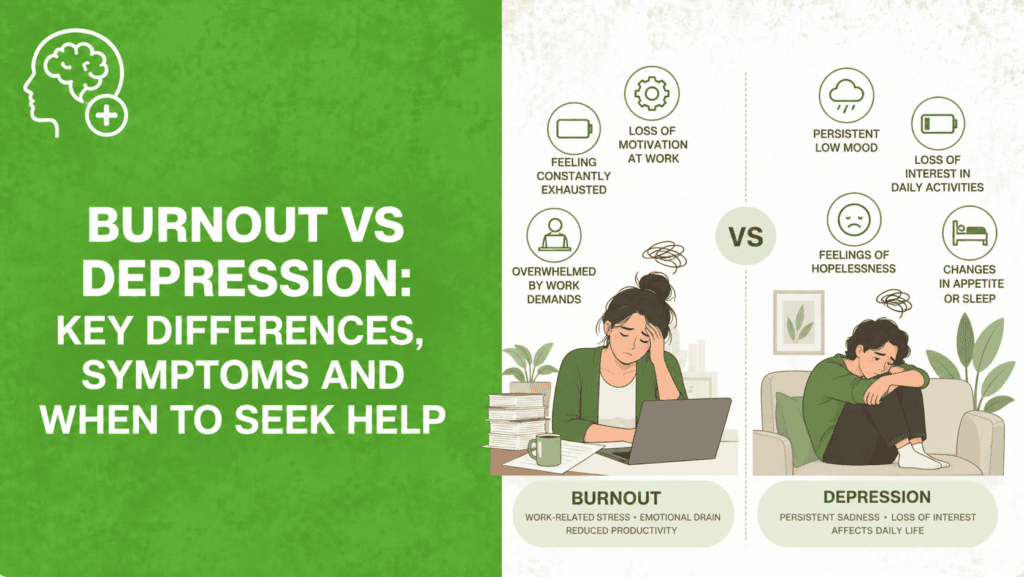
Feeling constantly exhausted, unmotivated or emotionally drained can make it difficult to understand what is happening. You may wonder whether you are experiencing burnout, depression, or simply a particularly stressful period.
Burnout and depression can share several symptoms, including fatigue, difficulty concentrating, reduced motivation and changes in sleep. However, they are not the same.
Burnout is generally associated with chronic workplace stress, while depression is a mental health condition that can affect how you feel, think and function across many areas of life.
Understanding the difference between burnout vs depression can help you recognise when you may need rest, changes to your environment or professional mental health support.
What Is Burnout?
Burnout is a state associated with prolonged and unmanaged workplace stress.
The World Health Organization describes burnout as an occupational phenomenon characterised by three main dimensions:
- Feelings of exhaustion or depleted energy
- Increased mental distance from work, negativity or cynicism related to work
- Reduced sense of professional effectiveness
Burnout is not classified as a medical condition. It specifically relates to the occupational context.
However, the emotional and physical impact of severe burnout can still significantly affect a person’s wellbeing and daily functioning.
What Is Depression?
Depression is a mental health condition that affects mood, thoughts, behaviour and everyday functioning.
It is different from occasionally feeling sad, disappointed or tired.
A depressive episode generally involves a persistent low mood or loss of interest or pleasure in activities, along with other symptoms that continue for a significant period of time.
Depression can affect:
- Work
- Relationships
- Sleep
- Appetite
- Energy levels
- Self-esteem
- Motivation
- Daily activities
Unlike burnout, depression is not necessarily linked to a particular workplace or stressful situation.
Burnout vs Depression: What Is the Difference?
The most important difference between burnout and depression is usually the context and breadth of the symptoms.
Burnout tends to be strongly connected with work-related stress. Depression can affect how you feel about almost every area of your life.
| Feature | Burnout | Depression |
|---|---|---|
| Main Context | Usually associated with chronic workplace stress | Can affect all areas of life |
| Energy | Often severe exhaustion related to work demands | Persistent fatigue or lack of energy may occur regardless of activity |
| Motivation | Motivation may primarily decrease toward work | Interest and motivation may decrease across work, hobbies, relationships and daily activities |
| Emotions | Frustration, cynicism, irritability or detachment from work | Persistent sadness, emptiness, hopelessness, guilt or worthlessness may occur |
| Enjoyment | A person may still enjoy activities away from work | Loss of interest or pleasure may extend to activities that were previously enjoyable |
| Rest | Time away from work may sometimes provide meaningful relief | Symptoms may continue even during holidays or periods of rest |
| Self-Esteem | May involve feeling ineffective or unsuccessful professionally | May involve broader feelings of worthlessness, guilt or hopelessness |
| Clinical Classification | Occupational phenomenon, not a medical diagnosis | Recognised mental health disorder |
Common Symptoms of Burnout
Burnout may develop gradually. In the early stages, you may simply feel more tired or frustrated with your work than usual.
Common signs of burnout can include:
- Feeling emotionally or physically exhausted
- Dreading the start of the workday
- Difficulty finding motivation to work
- Feeling detached from your job
- Becoming increasingly cynical about work
- Reduced satisfaction from professional achievements
- Difficulty concentrating at work
- Feeling less productive than usual
- Irritability with colleagues or clients
- Feeling that your work has little value
- Difficulty switching off after work
- Changes in sleep
- Headaches or other stress-related physical complaints
Common Symptoms of Depression
Depression can look different from one person to another.
Common symptoms may include:
- Persistent sadness or low mood
- Feeling empty or emotionally numb
- Loss of interest in previously enjoyable activities
- Persistent fatigue or lack of energy
- Feelings of hopelessness
- Feelings of guilt or worthlessness
- Difficulty concentrating or making decisions
- Changes in sleep
- Sleeping too much or too little
- Changes in appetite
- Unplanned changes in weight
- Feeling restless or slowed down
- Withdrawing from friends and family
- Difficulty completing everyday responsibilities
- Thoughts about death or suicide
Not everyone experiencing depression will have all of these symptoms.
Can Burnout Feel Like Depression?
Yes. Burnout and depression can feel similar because they share several possible symptoms.
Both may involve:
- Fatigue
- Reduced motivation
- Difficulty concentrating
- Sleep problems
- Irritability
- Feeling emotionally drained
- Reduced productivity
This overlap can sometimes make it difficult to know exactly what you are experiencing.
A mental health professional can explore the full pattern of your symptoms, how long they have been present and whether they are mainly related to work or extend into other areas of your life.
Can Burnout Lead to Depression?
Burnout and depression are distinct, but prolonged occupational stress may affect mental wellbeing.
Someone experiencing severe burnout may become increasingly exhausted, isolated or emotionally overwhelmed. In some cases, depressive symptoms may also develop.
This is one reason why persistent burnout symptoms should not simply be ignored or treated as something that must be pushed through.
How Do You Know If It Is Burnout or Depression?
There is no single question that can reliably distinguish burnout from depression, but examining where your symptoms occur can provide useful clues.
Ask Yourself: Do I Feel Better Away From Work?
If your symptoms are mainly related to your workplace and improve significantly when you are away from work, burnout may be contributing.
If the low mood, exhaustion and lack of interest continue during weekends, holidays or activities you normally enjoy, it may be worth considering whether depression or another mental health concern is involved.
Have I Lost Interest in Things Outside Work?
A person experiencing burnout may have little motivation for work but still enjoy:
- Spending time with friends
- Travelling
- Hobbies
- Exercise
- Family activities
Depression may cause a more widespread reduction in interest or pleasure.
Do I Feel Hopeless or Worthless?
Burnout may cause you to question your ability to perform your job effectively.
Depression can involve much broader negative beliefs about yourself, your future or your overall worth.
Persistent feelings of hopelessness or worthlessness deserve professional attention.
Signs of Workplace Burnout That Are Easy to Miss
Burnout does not always begin with complete exhaustion.
Some early signs can be subtle.
1. Sunday Evening Anxiety
Feeling persistent dread as the working week approaches can be an early indication that work-related stress is becoming difficult to manage.
2. Becoming Emotionally Detached From Work
You may stop caring about projects, results or professional relationships that previously mattered to you.
3. Increasing Cynicism
You may become increasingly negative about your organisation, colleagues, clients or the purpose of your work.
4. Difficulty Concentrating
Chronic stress and exhaustion can make it more difficult to focus, prioritise and make decisions.
5. Working Longer but Accomplishing Less
You may spend more time working while feeling that your productivity continues to decline.
6. Feeling Tired Even After Sleeping
Burnout-related exhaustion may not always disappear after a single good night’s sleep.
7. Becoming More Irritable
Small workplace problems may begin to feel unusually frustrating or overwhelming.
What Causes Burnout?
Burnout can develop when workplace stress continues for a prolonged period without adequate recovery or support.
Possible contributing factors include:
- Excessive workload
- Long working hours
- Unrealistic deadlines
- Lack of control over work
- Unclear job expectations
- Insufficient recognition
- Workplace conflict
- Lack of support from managers or colleagues
- Poor work-life boundaries
- Constant availability through phones or email
- Values that conflict with workplace expectations
- Repeatedly working without adequate recovery time
What Causes Depression?
Depression usually does not have one single cause.
It can develop through a combination of biological, psychological, social and environmental factors.
Factors associated with depression can include:
- Stressful life events
- Relationship difficulties
- Bereavement or significant loss
- Traumatic experiences
- Long-term health conditions
- Social isolation
- Family history of depression
- Ongoing financial or occupational stress
Depression can also occur when there is no single obvious trigger.
Burnout vs Stress: Are They the Same?
No. Stress and burnout are related, but they are not exactly the same.
Stress often involves feeling that there is too much to manage.
You may feel:
- Pressured
- Anxious
- Overloaded
- Restless
- Unable to switch off
Burnout may develop after stress continues for a long period without effective recovery.
Instead of simply feeling overloaded, you may begin to feel exhausted, detached and increasingly unable to engage with your work.
Burnout vs Anxiety
Anxiety can also occur alongside burnout.
A person experiencing workplace burnout may become anxious about:
- Deadlines
- Performance
- Making mistakes
- Meetings
- Work messages
- Returning to work after time off
An anxiety disorder, however, may involve excessive anxiety across several areas of life rather than only workplace concerns.
Burnout, anxiety and depression can also occur at the same time.
Can Taking a Holiday Fix Burnout?
Taking time away from work may provide temporary relief, particularly when exhaustion is closely connected to occupational stress.
However, if the underlying causes remain unchanged, the symptoms may return after you resume work.
Addressing burnout may require changes such as:
- Reducing excessive workload
- Setting clearer work boundaries
- Discussing expectations with managers
- Taking regular breaks
- Improving recovery time
- Prioritising sleep
- Seeking workplace or professional support
What Can You Do if You Are Experiencing Burnout?
If you recognise signs of burnout, addressing the problem early may help prevent it from becoming more severe.
Identify the Main Sources of Stress
Try to identify what is creating the greatest strain.
For example:
- Is the workload unrealistic?
- Are your responsibilities unclear?
- Are you constantly working outside normal hours?
- Are workplace relationships causing significant stress?
Create Clearer Boundaries
Where possible, establish boundaries around when work begins and ends.
This may include reducing unnecessary work messages outside working hours and creating clearer periods for rest and recovery.
Take Regular Breaks
Working continuously without breaks can increase physical and mental exhaustion.
Short periods of recovery throughout the day can help reduce accumulated stress.
Prioritise Sleep
Chronic sleep disruption can worsen emotional regulation, concentration and energy levels.
Talk to Someone
Speaking with a trusted colleague, manager, friend, family member or mental health professional may help you gain perspective and identify practical changes.
When Should You Seek Professional Help?
Consider speaking with a mental health professional if your symptoms are persistent, worsening or beginning to affect your ability to function.
You may benefit from professional support if:
- You feel exhausted most of the time
- You have lost interest in activities you normally enjoy
- You feel persistently sad or emotionally numb
- You frequently feel hopeless
- Your sleep or appetite has significantly changed
- You are struggling to concentrate or make decisions
- You feel unable to manage everyday responsibilities
- Your work stress is affecting your relationships
- You are relying on alcohol or other substances to cope
- Taking time away from work no longer provides relief
- Your symptoms have continued for several weeks
You do not need to wait until your symptoms become severe before seeking help.
When Is Depression an Emergency?
Some symptoms require urgent attention.
Seek immediate help if you:
- Have thoughts of suicide
- Think about harming yourself
- Feel that life is no longer worth living
- Have made plans to harm yourself
- Feel unable to keep yourself safe
If there is an immediate risk of harm, contact emergency medical services or go to the nearest emergency department.
How Can Therapy Help With Burnout?
Therapy can provide a structured space to understand the factors contributing to burnout and develop healthier ways of responding to stress.
A therapist may help you explore:
- Workplace stressors
- Personal expectations
- Perfectionism
- Difficulty setting boundaries
- Patterns of overworking
- Work-life balance
- Coping strategies
- Emotional regulation
Therapy may also help identify whether symptoms that appear to be burnout could instead be related to depression, anxiety or another mental health concern.
How Is Depression Treated?
Depression is treatable.
Treatment depends on the severity of symptoms, the person’s circumstances and other health considerations.
Psychological Therapy
Several evidence-based psychological approaches can help people experiencing depression.
Therapy can help people identify unhelpful thought patterns, develop coping strategies and gradually reconnect with meaningful activities and relationships.
Lifestyle and Social Support
Depending on the person’s situation, treatment may also involve improving sleep, physical activity, social connection and daily routines.
Medication
In some cases, a psychiatrist or other appropriately qualified medical professional may recommend medication.
Medication should only be started, changed or discontinued under professional medical guidance.
Burnout vs Depression: Key Takeaway
Burnout and depression can both cause exhaustion, reduced motivation, concentration difficulties and emotional distress, but they are not the same.
Burnout is primarily associated with chronic workplace stress and may improve when occupational demands are reduced or when a person has meaningful time away from work.
Depression tends to affect a broader range of life and may involve persistent low mood, loss of pleasure, hopelessness, guilt or worthlessness even when the person is away from work.
Because the symptoms can overlap, it is not always possible to distinguish between them on your own.
If your symptoms have persisted, are getting worse or are affecting your work, relationships or everyday functioning, speaking with a mental health professional can help clarify what you are experiencing.
Frequently Asked Questions About Burnout and Depression
1. How can I tell if I have burnout or depression?
Burnout is usually strongly connected with chronic workplace stress, while depression can affect mood, motivation and interest across many areas of life. Because there can be considerable overlap, a professional assessment can be helpful when symptoms persist.
2. Can burnout turn into depression?
Burnout and depression are different, but prolonged stress and severe burnout can negatively affect mental wellbeing. Some individuals experiencing burnout may also develop depressive symptoms.
3. Is burnout a mental illness?
Burnout is not classified by the World Health Organization as a medical condition or mental disorder. It is described as an occupational phenomenon related to chronic workplace stress that has not been successfully managed.
4. Does burnout go away with rest?
Rest may reduce some symptoms, but if the underlying workplace pressures remain unchanged, burnout may return. Longer-term improvement may require changes to workload, boundaries, recovery time or workplace conditions.
5. Can depression be caused by work stress?
Stressful experiences, including occupational stress, can contribute to mental health difficulties. However, depression usually develops through a combination of factors rather than one single cause.
6. Can you have burnout and depression at the same time?
Yes. A person can experience occupational burnout while also experiencing depression, anxiety or another mental health condition.
7. What are the early warning signs of burnout?
Early signs may include persistent work-related exhaustion, reduced motivation, cynicism, irritability, difficulty concentrating and feeling increasingly detached from your job.
8. How long does burnout last?
There is no fixed recovery period. The duration can depend on the severity of the burnout, the underlying workplace factors, the amount of recovery available and whether meaningful changes are made.
9. When should I see a psychologist for burnout?
Consider professional support if workplace stress is affecting your sleep, mood, relationships, physical health or ability to function, particularly if your usual coping strategies are no longer helping.
10. When should I seek help for depression?
If you experience persistent low mood, loss of interest, hopelessness, significant changes in sleep or appetite, or difficulty functioning for two weeks or longer, speaking with a healthcare or mental health professional is recommended.
Get Professional Support for Burnout, Stress and Depression
If ongoing work stress, emotional exhaustion, low mood or loss of motivation is beginning to affect your everyday life, professional support can help you understand what you are experiencing.
At Inspiron Psychological Well-Being Centre, our mental health professionals support individuals experiencing workplace stress, burnout, anxiety, low mood and depression.
Book a therapy session to understand your symptoms, identify the factors contributing to them and explore practical strategies for improving your emotional wellbeing.