
The Smile That’s Working Overtime: When You Look Fine but Feel Overwhelmed
Introduction
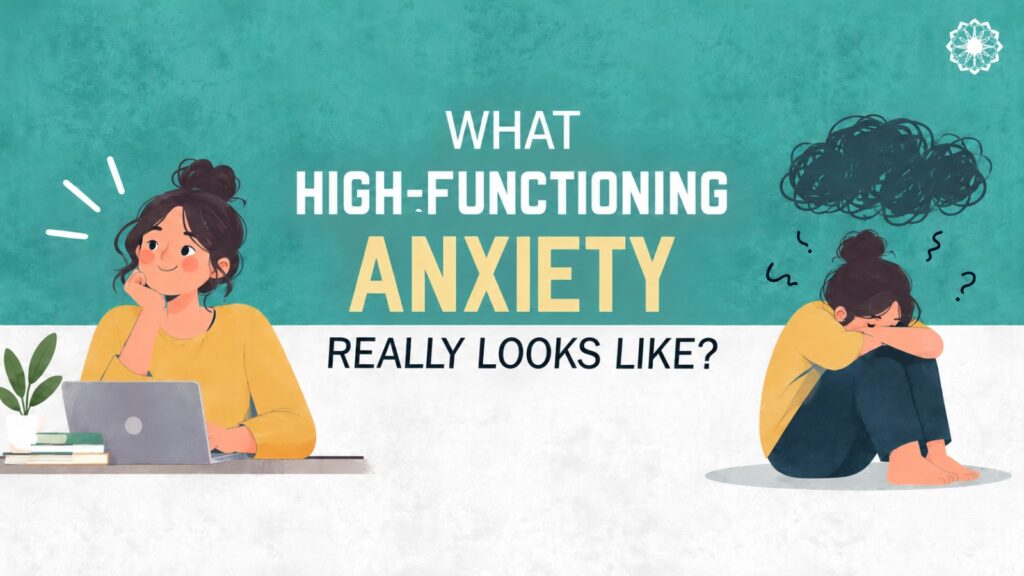
You have the job title, the packed calendar, and the reputation of being the person who always gets things done. From the outside, your life seems organised and successful. But behind that composed exterior, you may be dealing with racing thoughts, sleepless nights, constant self-doubt, and the pressure to keep everything under control.
You may meet deadlines, take care of responsibilities, and show up for others while privately feeling exhausted by your own thoughts.
This is one way high-functioning anxiety can show up.
Some people continue to perform well at work and manage their daily responsibilities even when they are experiencing significant anxiety. Because their struggles are not always visible, others may not realise how much effort it takes for them to keep going.
Sometimes, what looks like success on the outside can feel like a constant struggle on the inside.
What Is High-Functioning Anxiety?
High-functioning anxiety is an informal term used to describe people who experience anxiety while continuing to manage their personal, social, and professional responsibilities.
They may appear confident, organised, dependable, and productive. Internally, however, they may struggle with excessive worry, perfectionism, fear of making mistakes, and difficulty relaxing.
Imagine a duck gliding calmly across a pond. Everything looks effortless on the surface, but underneath, its legs are paddling continuously. High-functioning anxiety can feel similar: the outside appears calm, while the mind is constantly working to prevent something from going wrong.
It is important to understand that high-functioning anxiety is not a formal clinical diagnosis. These experiences may overlap with recognised anxiety disorders, including generalised anxiety disorder or social anxiety disorder. A qualified mental health professional can help assess the nature of the difficulties.
Why Does High-Functioning Anxiety Often Go Unnoticed?
People who experience high-functioning anxiety may be the ones others depend on the most. They complete tasks, take responsibility, help colleagues, and make sure things run smoothly.
Because they continue to function well, their distress can go unnoticed.
Sometimes, they also minimise their own experiences. They might think, “My life is going well, so why am I feeling anxious?” or “Other people have bigger problems than I do.”
Being productive does not necessarily mean feeling emotionally well. A person can be successful and still need support.
7 Common Signs and Symptoms of High-Functioning Anxiety
The signs of high-functioning anxiety can sometimes resemble positive qualities such as responsibility, ambition, and attention to detail. The difficulty arises when these behaviours are driven by persistent fear, pressure, or the feeling that something bad will happen if they stop.
1. Constant Overthinking and Worry
You may repeatedly replay conversations, anticipate possible problems, or question decisions you have already made. Even when something goes well, your mind may quickly move on to the next concern.
2. Perfectionism and Fear of Making Mistakes
You may set extremely high standards for yourself and feel distressed when you fall short. Even small mistakes or constructive feedback can trigger self-doubt or a sense of failure.
3. Difficulty Saying No
You might accept additional responsibilities even when your schedule is already full. Saying no may bring feelings of guilt or fears of disappointing others, leaving you emotionally exhausted.
4. Overpreparing for Everyday Situations
You may spend hours preparing for a meeting, rehearsing a conversation, or imagining different outcomes. Preparation can be useful, but anxiety may make it difficult to feel ready, no matter how much you prepare.
5. Difficulty Relaxing
Even during your free time, you may feel guilty about not being productive. You might find yourself thinking about unfinished tasks or worrying about what needs to happen next.
6. Physical Symptoms of Anxiety
Anxiety can also affect the body. You may experience muscle tension, headaches, a racing heartbeat, restlessness, digestive discomfort, fatigue, or disrupted sleep.
Persistent or unexplained physical symptoms should be assessed by an appropriate healthcare professional, as they may have other causes.
7. Feeling That You Are Never Doing Enough
You achieve a goal, but the satisfaction does not last. Instead, you begin thinking about the next task or worrying about whether you could have done better.
Over time, it may become difficult to recognise your achievements without immediately focusing on what is missing.
High-Functioning Anxiety vs Everyday Stress
Everyday stress is often connected to a specific situation, such as a deadline, an important meeting, or a difficult conversation. It may reduce once the situation is resolved.
With persistent anxiety, worry may continue across different situations, even when there is no immediate problem or when things have gone well.
For example, someone may complete an important presentation successfully but spend the evening replaying every sentence, wondering whether others judged them negatively.
These are general patterns rather than diagnostic criteria. The duration, intensity, and impact of symptoms matter when assessing anxiety.
Why Might High Achievers Experience High-Functioning Anxiety?
There is no single explanation for why someone experiences anxiety while maintaining a high level of performance. However, certain patterns may contribute.
Fear of Failure
Mistakes may feel like more than ordinary setbacks. A person might interpret them as evidence that they are not capable or competent enough.
Linking Self-Worth to Achievement
When personal worth becomes closely tied to performance, every task can feel like a test of one’s value. Success may bring temporary relief, but the pressure to prove oneself returns.
Fear of Disappointing Others
Some people find it difficult to prioritise their own needs because they worry about letting family members, colleagues, or friends down.
The Need for Control
Planning and preparing can provide a sense of safety. However, trying to anticipate every possible outcome can increase worry and make uncertainty difficult to tolerate.
These patterns are not character flaws. Understanding them can help people develop a healthier relationship with their thoughts, responsibilities, and expectations.
How to Manage High-Functioning Anxiety
Managing anxiety does not mean giving up ambition or becoming less responsible. It means learning to pursue your goals without allowing fear and constant pressure to control your everyday life.
1. Recognise and Acknowledge Your Anxiety
Start by noticing what happens internally, even when you appear to be managing well.
Ask yourself:
- What am I worrying about right now?
- Am I responding to an actual problem or an imagined possibility?
- What am I afraid might happen if I make a mistake?
Acknowledging anxiety is not a sign of weakness. It is a step towards understanding what you need.
2. Develop a Healthier Relationship With Perfectionism
Instead of asking, “How can I make this perfect?”, try asking, “What would be good enough for this task?”
Not every task requires the same level of effort. Learning to distinguish between what genuinely needs attention and what is driven by fear can help reduce unnecessary pressure.
3. Reduce Unhelpful Comparison
Comparing yourself with others can create standards that are difficult to meet. You may see someone else’s achievements without knowing the challenges they face.
Reflect on what success means to you personally. Consider whether your goals reflect your values or whether they are mainly driven by the need for approval.
4. Practise Setting Boundaries
Being dependable does not mean being available all the time.
You can practise communicating your capacity, declining additional responsibilities when necessary, and allowing yourself time to recover.
For example, instead of automatically agreeing to a new task, you could say, “I have a few deadlines to complete first. Can I confirm my availability after reviewing my workload?”
5. Allow Yourself to Rest Without Guilt
Rest is not something you must earn by completing every task.
Try making space for activities that are enjoyable rather than productive. You may initially feel uncomfortable or guilty, especially if you are used to staying busy. Notice that feeling without immediately responding to it by returning to work.
6. Learn to Respond Differently to Anxious Thoughts
When a worry appears, you do not have to accept it as a fact or spend hours trying to eliminate it.
For example, if you think, “What if my manager thinks I did a poor job?”, pause and consider:
- What evidence supports this thought?
- What evidence might suggest otherwise?
- Is there another reasonable way to understand the situation?
- Can I tolerate not knowing exactly what someone else thinks?
The aim is not to force yourself to think positively. It is to develop a more balanced perspective.
Can Therapy Help With High-Functioning Anxiety?
Yes. Therapy can help you understand the patterns that maintain anxiety and develop more helpful ways of responding to them.
Cognitive Behavioural Therapy (CBT), an evidence-based psychological treatment for several anxiety disorders, can help explore the relationship between thoughts, emotions, and behaviour.
Depending on your needs, therapy may focus on:
- Identifying and challenging unhelpful thinking patterns.
- Understanding perfectionism and fear of failure.
- Managing excessive worry and rumination.
- Building emotional regulation skills.
- Learning to set boundaries and communicate needs.
- Developing self-compassion and a healthier sense of self-worth.
- Gradually learning to tolerate uncertainty.
The goal is not necessarily to eliminate every anxious thought. It is to help you respond to anxiety in ways that allow you to live more freely and sustainably.
Medication may also be appropriate for some people following an assessment by a qualified prescribing professional. Treatment decisions should be based on individual needs.
When Should You Seek Professional Help?
You do not have to wait until anxiety affects your ability to work or manage everyday responsibilities before seeking support.
Consider speaking with a mental health professional if:
- Worry feels persistent or difficult to manage.
- You regularly struggle with sleep or concentration.
- You feel exhausted despite continuing to meet your responsibilities.
- Fear of making mistakes influences your decisions.
- You find it difficult to relax or enjoy your free time.
- Anxiety is affecting your relationships or overall well-being.
Seeking support does not mean you have failed to manage your life. It means you are taking your well-being seriously.
What Can Workplaces Do to Support Employees Experiencing Anxiety?
Workplaces often recognise performance, reliability, and productivity as signs of success. However, these qualities do not always reflect an employee’s emotional well-being.
Employees who consistently meet expectations may still be experiencing considerable stress or anxiety.
Supportive workplaces can help by encouraging open conversations about mental health, respecting reasonable boundaries, promoting manageable workloads, and making professional support accessible.
A healthy workplace recognises that employees are people with emotional needs, not just the work they deliver.
Summary
High-functioning anxiety can be difficult to recognise because it does not always interfere visibly with a person’s achievements or responsibilities.
You may continue to perform well, support others, and meet expectations while privately struggling with worry, perfectionism, and emotional exhaustion.
Recognising these experiences is an important first step. Learning to set boundaries, respond differently to anxious thoughts, and allow yourself to rest can help build a healthier relationship with achievement and responsibility.
You do not have to reach a breaking point to deserve support.
You can be capable and still feel overwhelmed. You can be ambitious and still need rest. You can be the person others depend on and still ask for help.
Frequently Asked Questions (FAQs)
Is high-functioning anxiety a mental health disorder?
No. High-functioning anxiety is an informal descriptive term, not a formal clinical diagnosis. A mental health professional can assess whether your symptoms are related to a recognised anxiety disorder or another concern.
What are the common signs of high-functioning anxiety?
Commonly described signs include excessive overthinking, perfectionism, fear of mistakes, difficulty saying no, overpreparing, disrupted sleep, and difficulty relaxing despite appearing productive.
Can someone be successful and still experience anxiety?
Yes. A person can continue to achieve personal and professional goals while experiencing significant anxiety or emotional exhaustion. External success does not necessarily reflect internal well-being.
Is high-functioning anxiety the same as generalised anxiety disorder?
No. Generalised anxiety disorder is a recognised clinical diagnosis. High-functioning anxiety is an informal term that may describe experiences that overlap with generalised anxiety disorder or other anxiety-related difficulties.
How can I stop overthinking all the time?
Begin by noticing recurring worry patterns and identifying what triggers them. Balanced thinking, healthy boundaries, and evidence-based psychological approaches such as CBT may help. If overthinking is persistent or distressing, professional support can be beneficial.
Can therapy help even if my life seems fine?
Yes. Therapy can help you understand emotional patterns, manage anxiety, and build healthier coping strategies even when you continue to function well in daily life.
How do I know if I need professional support?
Consider seeking support if anxiety is persistent, affects your sleep or relationships, makes it difficult to relax, or causes significant distress. You do not need to wait for a crisis to speak with a professional.
You Don’t Have to Keep Holding Everything Together Alone
You deserve to feel supported, not just to appear strong.
At Inspiron Psychological Well-Being Centre, you can explore your experiences in a supportive, non-judgmental environment and work towards healthier ways of managing anxiety, stress, and emotional challenges.
You can reach out to explore online or in-person psychological support based on your needs.