
Couples Therapy: When Should You Seek Help? A Complete Guide to Building Healthier Relationships
Every relationship has disagreements. Differences in opinions, occasional misunderstandings, and conflicts are a natural part of sharing life with another person. However, when disagreements become frequent, communication breaks down, or emotional distance starts to grow, many couples begin to wonder whether they need professional support.
Unfortunately, there’s a common misconception that couples therapy is only for relationships that are about to end.
The reality is quite different.
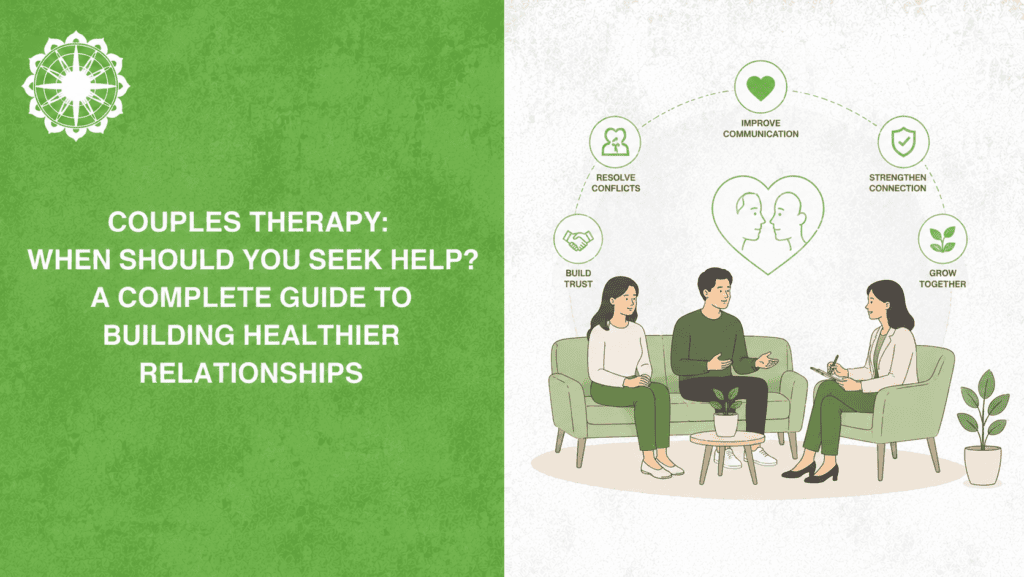
Couples therapy is designed to help partners improve communication, rebuild trust, resolve conflicts more effectively, and strengthen their emotional connection. Many couples seek therapy not because they want to separate, but because they want to build a healthier relationship.
Whether you’re dating, engaged, newly married, or have been together for decades, relationship counselling can provide practical tools that support long-term relationship satisfaction.
In this guide, we’ll explore when couples therapy may be beneficial, what happens during sessions, common myths, and how therapy can help couples reconnect.
What Is Couples Therapy?
Couples therapy is a form of psychological counselling where both partners work with a trained mental health professional to improve their relationship.
Rather than deciding who is “right” or “wrong,” the therapist helps both individuals understand each other’s perspectives, recognise unhealthy communication patterns, and develop healthier ways of managing conflict.
The goal is not to assign blame.
The goal is to help the relationship become stronger, healthier, and more fulfilling.
Therapists may use evidence-based approaches such as:
- Emotionally Focused Therapy (EFT)
- Cognitive Behavioural Therapy (CBT)
- Gottman Method principles
- Solution-Focused Therapy
- Communication and conflict-resolution techniques
Each approach is tailored to the couple’s unique concerns and goals.
Signs You May Benefit from Couples Therapy
Many couples wait until problems become overwhelming before seeking support.
Recognising challenges early often leads to better outcomes.
Here are some common signs that therapy may be helpful.
1. Communication Has Become Difficult
Do conversations often end in arguments? Do you feel misunderstood or unheard?
Healthy relationships depend on effective communication. If discussions regularly become defensive, critical, or emotionally draining, therapy can help both partners develop healthier communication skills.
2. You’re Having the Same Argument Repeatedly
Every couple has disagreements.
However, if you’re repeatedly arguing about the same issues without finding solutions, it may indicate deeper emotional needs that haven’t been addressed.
A therapist helps uncover these underlying patterns rather than simply focusing on the surface disagreement.
3. Emotional Distance Has Increased
Many couples describe feeling more like roommates than partners.
Signs include:
- Less meaningful conversation
- Reduced emotional intimacy
- Feeling disconnected
- Spending less quality time together
- Feeling lonely despite being in a relationship
Therapy creates opportunities to rebuild emotional closeness.
4. Trust Has Been Damaged
Trust can be affected by many situations, including:
- Dishonesty
- Financial secrecy
- Emotional affairs
- Infidelity
- Broken promises
- Repeated disappointments
Rebuilding trust takes time, honesty, accountability, and guided communication.
Couples therapy provides a structured environment where healing can begin.
5. Major Life Changes Are Creating Stress
Life transitions often place additional pressure on relationships.
These may include:
- Marriage
- Parenthood
- Career changes
- Relocation
- Financial difficulties
- Caring for ageing parents
- Health concerns
Even positive life events can introduce new responsibilities and expectations.
Therapy helps couples adapt together rather than growing apart.
Common Relationship Challenges Addressed in Therapy
Relationship counselling supports couples experiencing a wide range of concerns. These include:
- Communication difficulties — Learning healthier ways to express emotions without criticism or defensiveness.
- Frequent conflict — Understanding recurring disagreements and developing practical conflict-resolution skills.
- Intimacy concerns — Exploring emotional and physical intimacy in a respectful, supportive environment.
- Parenting differences — Helping parents navigate differing parenting styles while maintaining a strong partnership.
- Financial disagreements — Developing healthier conversations around budgeting, spending, and shared financial goals.
- Work-life balance — Managing career demands without sacrificing relationship quality.
- Premarital counselling — Preparing couples for marriage by discussing expectations, values, communication, finances, and future planning.
What Happens During Couples Therapy?
Many people worry that the therapist will take one person’s side.
This isn’t how couples therapy works.
A therapist remains neutral and focuses on understanding both perspectives.
During early sessions, you may discuss:
- Your relationship history
- Current challenges
- Communication patterns
- Areas of conflict
- Relationship strengths
- Individual goals
- Shared goals as a couple
As therapy progresses, sessions often include practical exercises that improve communication, emotional understanding, and problem-solving.
Between sessions, couples may also receive activities to practise new skills in everyday life.
Benefits of Couples Therapy
Professional support can help couples develop skills that continue benefiting the relationship long after therapy ends. Some common benefits include:
Improved Communication
Learning how to listen actively, express feelings respectfully, and understand each other’s needs.
Better Conflict Resolution
Arguments become opportunities for understanding rather than cycles of blame.
Stronger Emotional Connection
Couples often rediscover empathy, appreciation, and emotional closeness.
Rebuilding Trust
Therapy provides a structured pathway for addressing difficult experiences honestly and respectfully.
Healthier Problem-Solving
Instead of avoiding issues or arguing repeatedly, couples learn practical strategies for working together.
Common Myths About Couples Therapy
“Therapy is only for unhappy couples.”
Not true. Many couples attend therapy simply to strengthen their relationship and improve communication before problems become more serious.
“The therapist will choose sides.”
Professional therapists remain neutral. Their role is to help both partners understand one another and develop healthier relationship patterns.
“Going to therapy means our relationship has failed.”
Seeking support is actually a sign of commitment. It shows both partners are willing to invest in improving the relationship.
“Only married couples need therapy.”
Relationship counselling can benefit dating couples, engaged couples, married couples, and long-term partners alike.
How to Prepare for Your First Couples Therapy Session
Before attending your first session:
- Be open to listening as much as speaking.
- Focus on understanding rather than proving who’s right.
- Be honest about your feelings.
- Keep realistic expectations.
- Remember that meaningful change takes time.
Approaching therapy with curiosity and patience often leads to better outcomes.
When Is It Too Late for Couples Therapy?
Many couples ask this question.
The truth is that there’s no universal timeline.
Some couples seek therapy after months of conflict. Others come after years of emotional distance.
While earlier intervention often makes change easier, therapy can still be valuable even when relationships have faced significant challenges.
The most important factor is whether both partners are willing to participate honestly and work towards healthier communication.
Frequently Asked Questions
How many couples therapy sessions are usually needed?
The number varies depending on each couple’s goals, concerns, and progress. Some benefit from short-term therapy, while others choose longer-term support.
Does the therapist take sides?
No. Couples therapists remain neutral and help both partners communicate more effectively.
Can unmarried couples attend therapy?
Yes. Couples therapy is suitable for dating, engaged, and long-term partners as well.
Is everything discussed confidential?
Therapists follow professional confidentiality standards while creating a safe environment for both partners.
Can therapy help after trust has been broken?
Many couples successfully work towards rebuilding trust through honest communication, accountability, and guided therapeutic support.
Final Thoughts
Every relationship experiences challenges. What matters is how those challenges are addressed.
Couples therapy isn’t about assigning blame or deciding who is right. It’s about understanding one another more deeply, improving communication, rebuilding emotional connection, and creating healthier ways of navigating life’s challenges together.
Seeking support early can prevent small misunderstandings from becoming long-term patterns and can strengthen your relationship for years to come.
At Inspiron Health, our experienced psychologists provide compassionate, evidence-based couples therapy tailored to your unique relationship. Whether you’re facing communication difficulties, trust concerns, life transitions, or recurring conflicts, we’re here to help you build a stronger, healthier partnership.
If you’re ready to improve your relationship, book a couples therapy consultation with Inspiron Health and take the first step towards better communication, deeper understanding, and lasting connection.